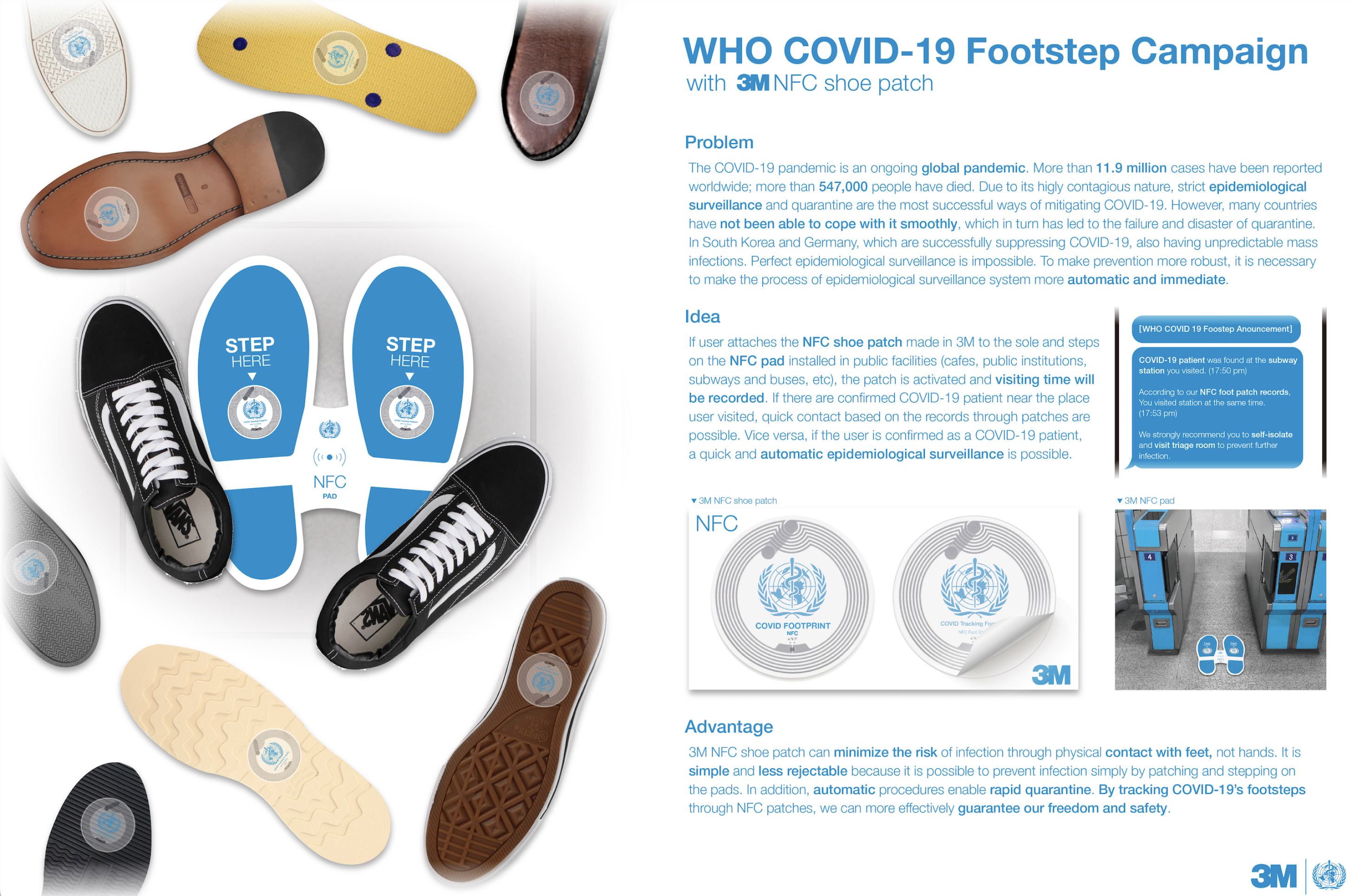
A campaign using NFC shoe patches to make contact tracing more accessible to digitally underserved groups and automate the identification of potential exposures.
Year / Duration
2020 · 2 months
Brand
WHO × 3M (Conceptual Campaign)
Project type
Independent Team Project (4-person student team)
Role
Concept development, Interaction design
01 CONTEXT
Contact tracing: A critical tool in containing COVID-19
During the COVID-19 pandemic, contact tracing became an essential measure for containing the virus by identifying infected individuals' movements and notifying those potentially exposed.To support these efforts, many countries introduced digital check-in systems using QR codes and smartphones to collect visit records.
02 PROBLEM
A public health system that wasn't accessible to everyone
Smartphone-based check-in systems required users to manually register each visit, creating barriers for older adults and people with visual impairments.These barriers could lead to incomplete visit records, reducing the accuracy and speed of contact tracing.
03 INSIGHT
What if every step could become a check-in?
Effective contact tracing depends on widespread and effortless participation. By focusing on walking—an everyday action shared by nearly everyone—we explored how visits could be recorded without requiring users to operate a digital device.
04 IDEA
Every step counts toward stopping the spread.
The WHO COVID-19 Footstep Campaign proposes a contactless check-in system using NFC patches attached to shoe soles and NFC pads installed in public spaces.When users step on an NFC pad at public facilities or transportation hubs, their visit location and time are automatically recorded. If their recorded movements overlap with those of a confirmed COVID-19 case, they receive an alert recommending testing and self-isolation.By minimizing manual check-ins and hand contact, the campaign aims to enable faster identification of potential contacts and more timely exposure notifications, helping prevent the spread of infection.